
淺談 C# 的 GetHashCode()
上個星期看到同事在分享 Bloom Filter 時,讓我想到 Dictionary 的鍵比較,因為它們都依賴於雜湊值來快速判斷元素是否存在。當然兩者只是都使用一個陣列結構,並使用雜湊值來當索引,但具體用法還是不同。
GetHashCode()
GetHashCode() 是一個用來產生整數型雜湊值的方法,這個值主要用來比對物件值是否相等。實作 GetHashCode() 要遵守以下原則:
- 如果兩個物件被認為相等(
Equals()回傳true),GetHashCode()必須回傳相同的值。 - 如果兩個物件不相等,則
GetHashCode()不需要回傳不同的值。 GetHashCode()不應該拋出例外狀況。
GetHashCode() 方法常用於以下情況:
IDictionary<TKey, TValue>、Dictionary的實作類別:如Dictionary<TKey, TValue>和HashTable,這類類別使用GetHashCode()進行鍵的快速比對。ISet<T>的實作類別:如HashSet<T>,使用GetHashCode()來判斷元素唯一性。- LINQ 的
Distinct()方法:使用GetHashCode()來去除重複的元素。
如果覆寫了 Equals() 卻未覆寫 GetHashCode(),即使物件在 Equals() 下相等,這些類別仍可能認為它們不相等,導致錯誤行為。實際上,當只覆寫 Equals(),Visual Studio 會出現以下警告。
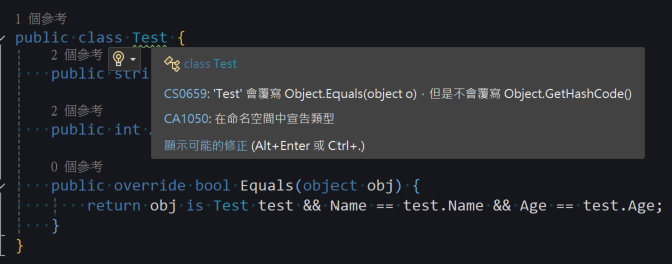
使用以下程式碼測試:
Test test1 = new() {
    Name = "王大明",
    Age = 10
};

Test test2 = new() {
    Name = "王大明",
    Age = 10
};

Dictionary<Test, string> dic = new() {
    [test1] = "測試"
};

Console.WriteLine(test1.Equals(test2));
Console.WriteLine(dic.ContainsKey(test2));


public class Test {
    public string Name { get; set; }

    public int Age { get; set; }

    public override bool Equals(object obj) => obj is Test test && Name == test.Name && Age == test.Age;
}得到結果如下:
True
FalseGetHashCode() 的實作
最簡單的實作方式是使用 Visual Studio 的重構功能來產生。使用以下程式碼為例:
public class Test {
    public string Name { get; set; }

    public int Age { get; set; }
}點擊 Test 類別,按 ALT + Enter 開啟重構選項,並選擇「產生 Equals 和 GetHashCode...」。
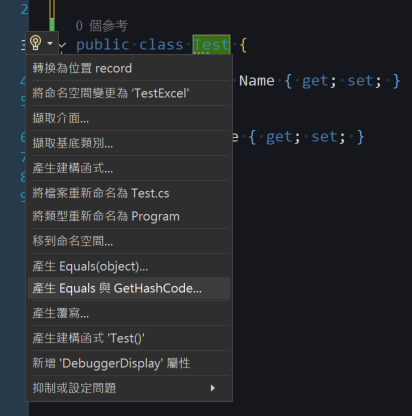
選擇要作為 Equals() 判斷的成員,也可以選擇一同實作 IEquatable<T> 和 運算子(== 和 !=),這邊先不勾選這些額外專案:
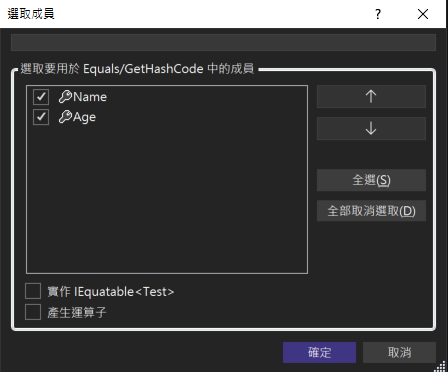
產生程式碼如下:
public class Test {
    public string Name { get; set; }

    public int Age { get; set; }

    public override bool Equals(object obj) => obj is Test test && Name == test.Name && Age == test.Age;
    public override int GetHashCode() => HashCode.Combine(Name, Age);
}不過由於 HashCode.Combine() 是 .NET Core 2.1 才加入的,.NET Framework 並沒有支援。對於 .NET Framework 版本,產生的程式碼可能如下:
 public class Test {
    public string Name { get; set; }

    public int Age { get; set; }

    public override bool Equals(object obj) => obj is Test test && Name == test.Name && Age == test.Age;

    public override int GetHashCode() {
        int hashCode = -1360180430;
        hashCode = hashCode * -1521134295 + EqualityComparer<string>.Default.GetHashCode(Name);
        hashCode = hashCode * -1521134295 + Age.GetHashCode();
        return hashCode;
    }
}程式碼說明:
-1360180430和-1521134295是常數,用來初始化和組合雜湊碼,以產生更均勻分布的雜湊值。這些常數通常是大質數,因為質數在雜湊函式中有助於減少碰撞的機率。- -1360180430:這是初始雜湊碼值。透過使用一個非零的起始值(通常是質數),可以確保物件的雜湊碼不同於預設值,並且即使物件沒有任何屬性,也不會回傳零作為雜湊碼。
- -1521134295:這是用來組合雜湊值的乘數。使用一個質數乘數來混合各個欄位的雜湊值,可以增加結果的隨機性,從而減少雜湊碰撞的機率。
- 參考物件使用
EqualityComparer<T>.Default來計算雜湊值的原因:- 避免
null值的情況,當值null時,會回傳0。 - 確保在不同類別的物件上使用相同的雜湊運算規則。
- 避免
當然這 .Framework 的版本,不太好記,對於不支援 HashCode.Combine() 的 .NET Framework,部分開發者可能會使用匿名物件來取得 GetHashCode(),當然這個作法可能會因為建立臨時的匿名物件,而稍微影響效能。
public override int GetHashCode() => new { Name, Age }.GetHashCode();ContainsKey(TKey key) 的實作
這邊簡略的說明一下,如果想知道完整作法,底下有節錄 .NET 8 的實作,有興趣可以自己研究。
ContainsKey() 方法內部使用 FindValue() 方法來搜尋是否存在指定的 TKey。若找到對應的值,則表示 TKey 存在於 Dictionary<TKey, TValue> 中。 Dictionary 有兩個主要的陣列欄位,分別是:
_entries:型別為Entry[],Entry幫包含了TKey、TValue以及下一個具有相同 bucket 值的 entry 索引。_buckets:型別為int[],儲存了各個 bucket 值(TKey的 HashCode 經過模除等運算計算的值)和對應的 entry 索引的對照表。
而 FindValue() 實作流程如下:
- 計算傳入參數
key的 HashCode。這個 HashCode 用來快速定位_buckets陣列中對應的 entry 索引。透過這個索引,可以直接從_entries陣列中取得對應的 entry,避免逐筆搜尋,從而提升搜尋效率。 - 先比較
TKey的 HashCode 與 entry 中儲存的 HashCode。這樣可以先快速篩選出不匹配的專案,減少Equals()方法的呼叫次數。在大部分的情況下Equals()的計算成本都比 Hash 比較要高,因此可以進一步提升效能。 - 由於不同的物件可能具有相同的 HashCode,加上
_buckets中的索引是經過運算的結果,所以從 _buckets 取得的entry索引可能指向的並不一定是所需的專案。若發現不匹配,會利用entry.next來指向下一個具有相同 bucket 的專案索引,繼續比對,直到找到匹配的專案或逐一檢查所有可能的專案。
以下是節錄 FindValue() 在 .NET 8 的實作程式碼:
internal ref TValue FindValue(TKey key) {
    if (key == null) {
        ThrowHelper.ThrowArgumentNullException(ExceptionArgument.key);
    }

    ref Entry entry = ref Unsafe.NullRef<Entry>();
    if (_buckets != null) {
        Debug.Assert(_entries != null, "expected entries to be != null");
        IEqualityComparer<TKey>? comparer = _comparer;
        if (typeof(TKey).IsValueType && // comparer can only be null for value types; enable JIT to eliminate entire if block for ref types
            comparer == null) {
            uint hashCode = (uint)key.GetHashCode();
            int i = GetBucket(hashCode);
            Entry[]? entries = _entries;
            uint collisionCount = 0;

            // ValueType: Devirtualize with EqualityComparer<TKey>.Default intrinsic
            i--; // Value in _buckets is 1-based; subtract 1 from i. We do it here so it fuses with the following conditional.
            do {
                // Should be a while loop https://github.com/dotnet/runtime/issues/9422
                // Test in if to drop range check for following array access
                if ((uint)i >= (uint)entries.Length) {
                    goto ReturnNotFound;
                }

                entry = ref entries[i];
                if (entry.hashCode == hashCode && EqualityComparer<TKey>.Default.Equals(entry.key, key)) {
                    goto ReturnFound;
                }

                i = entry.next;

                collisionCount++;
            } while (collisionCount <= (uint)entries.Length);

            // The chain of entries forms a loop; which means a concurrent update has happened.
            // Break out of the loop and throw, rather than looping forever.
            goto ConcurrentOperation;
        } else {
            Debug.Assert(comparer is not null);
            uint hashCode = (uint)comparer.GetHashCode(key);
            int i = GetBucket(hashCode);
            Entry[]? entries = _entries;
            uint collisionCount = 0;
            i--; // Value in _buckets is 1-based; subtract 1 from i. We do it here so it fuses with the following conditional.
            do {
                // Should be a while loop https://github.com/dotnet/runtime/issues/9422
                // Test in if to drop range check for following array access
                if ((uint)i >= (uint)entries.Length) {
                    goto ReturnNotFound;
                }

                entry = ref entries[i];
                if (entry.hashCode == hashCode && comparer.Equals(entry.key, key)) {
                    goto ReturnFound;
                }

                i = entry.next;

                collisionCount++;
            } while (collisionCount <= (uint)entries.Length);

            // The chain of entries forms a loop; which means a concurrent update has happened.
            // Break out of the loop and throw, rather than looping forever.
            goto ConcurrentOperation;
        }
    }

    goto ReturnNotFound;

ConcurrentOperation:
    ThrowHelper.ThrowInvalidOperationException_ConcurrentOperationsNotSupported();
ReturnFound:
    ref TValue value = ref entry.value;
Return:
    return ref value;
ReturnNotFound:
    value = ref Unsafe.NullRef<TValue>();
    goto Return;
}異動歷程
- 2024-09-01 初版文件建立。